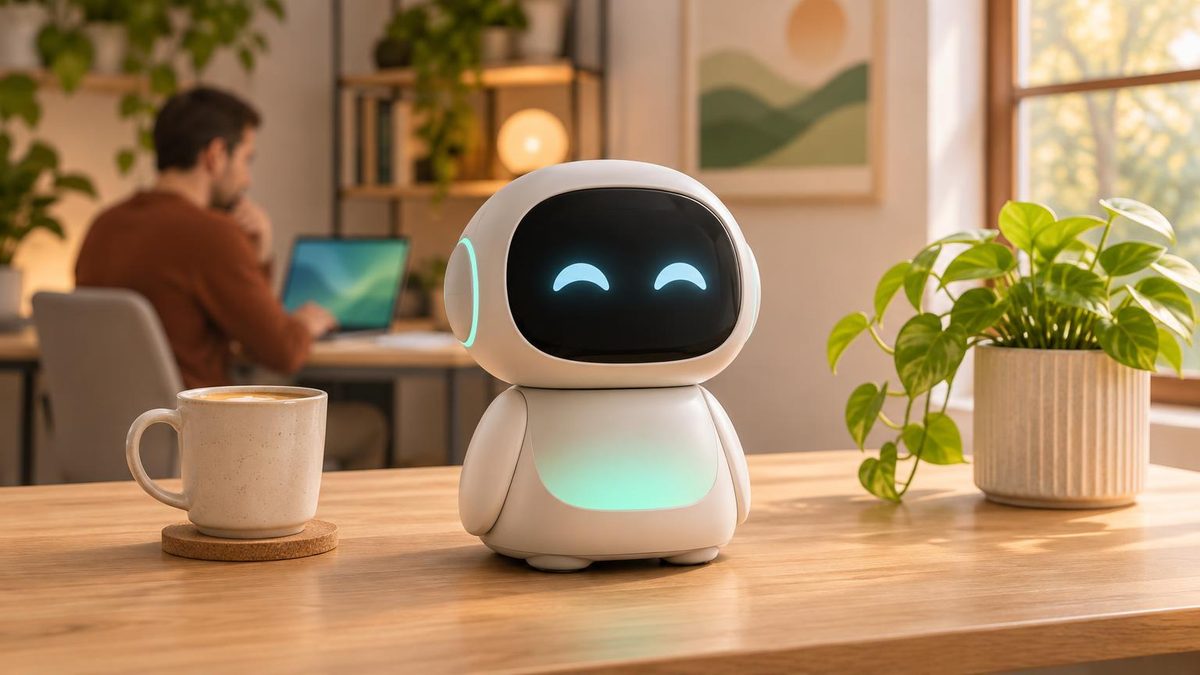
AI desk companion robots are worth buying only if you want a small, expressive pet that reacts to you, not a smarter assistant. The ones on sale today, like Living AI's Emo, KEYi's Loona and TangibleFuture's Looi, are fun and charming, but your phone still answers questions better, and the most ambitious home robots from Samsung and Amazon have stalled.
That split matters when you shop. A desk robot is a toy with a personality and a camera, priced from about $179 to $529. A "companion" like ElliQ or the Friend pendant is a conversation service with a monthly fee. Below are the seven you can actually buy, what each one really does, what it costs over two years, and the new ones (Lingverse iKairos, Meta's Muse Charm) that are still on the way.
The short version
- The best all-round desk pet is Living AI's Emo, listed at $289 on Living AI's store ($379 with the self-charging Home Station), with no subscription mentioned.
- The cheapest way in is Looi, a motorized stand that turns your own phone into the robot's face, on sale for $179 (regular price $259).
- Subscription companions cost far more over time: ElliQ is leased for a $249 setup fee plus a monthly membership, and Friend 2.0 charges $9.99 a month to remember more than 30 days.
- Samsung's Ballie was put on indefinite hold in January 2026, according to Bloomberg, and Amazon's Astro is still invite-only while Amazon builds a new home robot.
- Lingverse iKairos, a desk robot with a detachable wearable AI core shown at IFA 2026, has no price or release date yet.
What counts as an AI desk companion
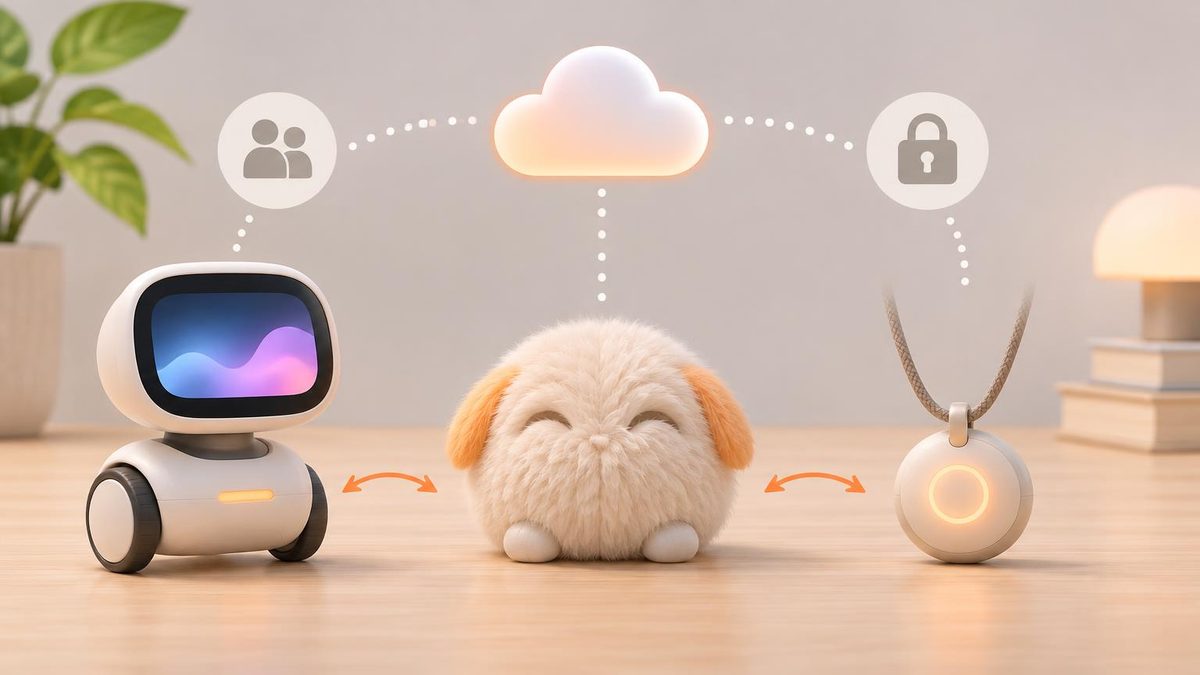
Three kinds of products get called "AI companions," and they solve different problems.
- Desk pets (Emo, Looi, Ropet, Moflin): small robots with a face or fur that move, react to touch and voice, and recognize people. Some can answer simple questions. Their main job is to be cute and present.
- Roaming pets (Loona, Amazon Astro, Samsung Ballie): robots that drive around the floor, follow people, and add a camera for home monitoring.
- Conversation companions (ElliQ, Friend): devices built around talking with you over weeks and months, with memory, check-ins and a subscription.
None of them replaces a phone assistant. If you want answers, translation or a camera that sees what you see, start with our guide to the best AI gadgets instead, which covers glasses, pins and pocket assistants.
How we picked
We included only companions on sale in the US on November 28, 2026, with a price confirmed on the maker's store or in recent major-outlet coverage. We ranked them on what they do without a subscription, two-year cost, personality and movement for the money, and how much data they collect (camera, always-on microphone, cloud processing).
This list is built from company specs, pricing pages and published reviews, not our own testing. Prices change often because of sales and tariffs, so we give the price we saw and the list price where they differ.
AI companion robots at a glance
| Device | Type | Price (US) | Subscription | Camera |
|---|---|---|---|---|
| Living AI Emo | Desk pet | $289, $379 with Home Station | None listed | Yes |
| KEYi Loona | Roaming pet | $404 on sale, $529 list | None listed | Yes, 720p |
| TangibleFuture Looi | Phone-powered desk robot | $179 on sale, $259 regular | None listed | Uses your phone |
| Casio Moflin | Furry pet | $429 (UK 369 pounds) | None, app optional | No |
| Ropet KAMOMO | Plush desk pet | From $299 | None, one optional cloud feature | Yes |
| ElliQ | Conversation companion | $249 setup fee | Required, leased | Yes |
| Friend 2.0 | AI pendant | $249 | $9.99 a month for long memory | No |
The best AI desk companions you can buy
Living AI Emo
Best for: a desk pet with the most personality per dollar
- Price: $289 (EMO White), $379 for the Go Home bundle
- Subscription: none listed by Living AI
- Moves: walks around the desk, charges on a skateboard dock
- Sensors: camera, microphones, touch
Emo is a palm-sized robot with a screen for a face. Living AI says it shows more than 1,000 expressions and movements, tracks sounds, recognizes people, plays music, dances and plays games. It can also answer simple questions, show the weather on its face, take photos, act as an alarm and switch on Living AI's smart light. The Go Home bundle adds a Home Station that Emo can drive back to on its own to charge. Reviews note it needs decent lighting to see well, and some owners report mixed durability and support. As a voice assistant it is basic next to your phone.
Get it if you want a lively, cute robot that lives on your desk with no monthly fee. Skip it if you want useful answers or are bothered by a camera that is always watching the room.
KEYi Loona
Best for: families who want a robot pet that roams the floor
- Price: $404 on sale on KEYi's store, $529 list, $299 refurbished
- Subscription: none listed on the product page
- AI: GPT-powered conversation, according to KEYi
- Battery: about 2 hours of play, returns to its dock (per TechRepublic)
Loona is the most capable robot on this list if movement matters. It drives around the house, turns toward voices, recognizes family members, responds to gestures and plays app-based games. KEYi says its conversation features are "powered by GPT," and kids can program it with Google Blockly. It also does remote monitoring, so you can look through its camera from your phone while you are out. That is the trade-off: TechRepublic flags that the 720p camera and microphones raise privacy questions, and play time is short before it heads back to charge. KEYi has also warned that tariffs could push prices up, so the sale price may not last.
Get it if you want a robot that follows people around and does a bit of home monitoring. Skip it if you do not want a camera rolling around your home or need more than a couple of hours of play at a time.
TangibleFuture Looi
Best for: trying a desk robot cheaply with a spare phone
- Price: $179 on sale, $259 regular price
- Subscription: none listed
- Brain: your own phone (app needs iOS 17 or later)
- Extra: wireless phone charging stand
Looi is not a computer. It is a motorized cradle with wheels: your phone snaps on magnetically (MagSafe iPhones attach directly, other phones use an included metal ring) and becomes the robot's face, camera and brain. TangibleFuture says it responds to voice, gestures and touch, remembers shared moments and handles reminders and games, and coverage describes its chat as ChatGPT-based. The catch is the phone itself. Reviews report that long sessions heat the phone and drain its battery, that you have to pull the phone off to use it normally, and that Android phones can feel laggy compared with iPhones. Many owners end up using an old phone as a dedicated "head."
Get it if you have a spare recent phone and want the cheapest way to try a desk companion. Skip it if you would be using your main phone, or you want a robot that works on its own.
Casio Moflin
Best for: comfort and calm with no camera and no chatbot
- Price: $429 in the US, 369 pounds in the UK
- Subscription: none, optional MofLife app
- Camera: none
- Battery: about 5 hours (per TechRepublic)
Moflin is a small furry creature with no face screen and no wheels. Casio's AI adjusts how it wriggles, purrs and reacts to touch and voice over time, so it develops its own behavior. It does not understand speech, it just recognizes voice characteristics, and it cannot answer anything. TechRepublic picked it as its best overall robot companion in October 2026 for people who want something that feels like a pet rather than an assistant. The price is high for a robot that does not move around or talk, but it collects far less data than anything else here.
Get it if you want a soothing, low-privacy pet to hold. Skip it if you expect any assistant features at all.
Ropet KAMOMO
Best for: a plush pet that keeps most of its brain offline
- Price: from $299 (Basic, no charging base), $349 Pro on promotion
- Subscription: none, one optional cloud feature
- Offline: face and gesture recognition run on the device
- Battery: about 2.5 to 3.5 hours, can stay plugged in
Ropet's KAMOMO is a soft, plush desk pet with a camera. According to TechRepublic, its face and gesture recognition run on the device, its behavior adapts over time, and it works fully offline. The one cloud feature, Dream Sketch, sends images to a cloud AI and has to be switched on by the user. That makes it one of the few companions that does not depend on the company's servers for its core behavior, which is also why it appears in our list of AI gadgets that work without a subscription. Prices vary a lot by retailer and bundle, so check the official store.
Get it if you want a cuddly pet that keeps working if the company's cloud goes away. Skip it if you want conversation or a long battery.
ElliQ
Best for: daily conversation and check-ins for someone who lives alone
- Price: $249 one-time lease initiation fee
- Subscription: required, Fortune reported from $40 a month
- Availability: US only, English only
- Ownership: leased, $1,500 fee if not returned within 45 days of cancelling
ElliQ, from Intuition Robotics, is a tabletop device with a moving "head" and a screen. Unlike the pets above, it starts conversations: it can light up and speak when someone walks in, suggest stretches, remind you about medication, play games and music, and let approved family members send messages and make video calls. The company designs it for adults 60 and older who spend most of the day alone. It is leased through a membership, not sold, so the device goes back if you stop paying. Intuition Robotics says it encrypts user data and will never sell it, and it told Fortune it does not think ElliQ can replace human company.
Get it if you are setting up a proactive companion with family video calls for a relative in the US. Skip it if you want to own the hardware or live outside the US.
Friend 2.0
Best for: curious early adopters who want an AI that talks back from a necklace
- Price: $249 (the first version was $129)
- Subscription: $9.99 a month to keep memories past 30 days
- Phone: needs an iPhone
- Battery: up to 15 hours, company claim
Friend is the wearable outlier. The plastic pendant listens all the time with no wake word, and in version 2.0, announced on July 30, 2026, it gained a speaker so it can talk back instead of only sending texts to your phone. The Gadgeteer reports it runs on Google's Gemini models. Each unit gets a random voice and personality during setup that you cannot change. Reviews have been rough: Wired's reviewers said it could come across as condescending or judgmental. An always-on microphone also records the people around you, which is a real problem in many places (see our guide to always-listening wearable privacy).
Get it if you want to see where AI companionship is heading and accept the privacy trade-off. Skip it if you want a useful assistant or an Android phone.
What these companions cost over two years
The sticker price is only half the story. Here is the total for 24 months at the prices above, assuming you keep any subscription the whole time.
| Device | Up front | Monthly | Total over 2 years |
|---|---|---|---|
| Looi | $179 to $259 | $0 | $179 to $259, plus a phone you supply |
| Emo | $289 to $379 | $0 | $289 to $379 |
| Ropet KAMOMO | $299 to $349 | $0 | $299 to $349 |
| Loona | $404 to $529 | $0 | $404 to $529 |
| Casio Moflin | $429 | $0 | $429 |
| Friend 2.0 | $249 | $9.99 for long memory | $249 without, $488.76 with memory |
| ElliQ | $249 | From $40 (reported) | At least $1,209, and you do not own it |
Two warnings. First, "no subscription" today does not guarantee one later: a robot whose voice features run in the cloud depends on the company paying those server bills. Second, the cheapest options tend to lean hardest on your own phone, which you will want back.
The big home robots: Ballie, Astro and what replaced them
If you were waiting for a big-brand robot, the news is not good.
Samsung Ballie. The rolling robot with a built-in projector was promised for 2025 and later got Google Gemini on board. It missed that launch, skipped CES 2026, and in January 2026 Bloomberg reported it had been shelved indefinitely. Samsung told Bloomberg Ballie is an "active innovation platform" for internal use. In July 2026, SamMobile reported leaked designs for a Ballie companion app, but Samsung has not confirmed anything. Treat it as not coming.
Amazon Astro. Astro launched in 2021 at a $1,449.99 list price ($999.99 introductory) and never left invite-only status. CNBC reported in November 2026 that it shipped to only a few thousand customers. Amazon still supports existing owners, killed the business version in July 2024, bought Fauna Robotics in March 2026 and is hiring for a "new-to-world robot product." No name, price or date has been announced.
The pattern is familiar from our history of AI hardware: big home robots are expensive to build and hard to make useful in a real living room.
Coming soon: iKairos, Muse Charm and other new companions
Lingverse iKairos. Shown at IFA 2026 in Berlin, iKairos from Singapore startup Lingverse is a round AI "pod" that sits in a small robotic base on your desk and detaches to be worn as a pendant when you leave. It runs Lingverse's LifeOS platform and is meant to be proactive: Digital Trends gives the example of it noticing you keep mentioning a hobby, then finding a weekend class nearby and suggesting you book it. Lingverse says voice processing happens on the device, cloud traffic is encrypted, user data will not be used to train AI models, and there is a physical camera shutter, a mute button and a recording light. There is no price, no release date and no named AI model yet, only a waitlist.
Meta Muse Charm. Meta's keychain-sized device puts an animated, Tamagotchi-like avatar on a small screen as the face of its Muse agent; we cover price and release in our Meta Muse Charm explainer.
Violoop. A desktop companion that plugs into a PC and prepares responses before you ask, according to Wallpaper. It is a Kickstarter project, so treat any ship date with caution.
So, are AI companion robots worth it?
For most people, no, not as assistants. Every robot here is worse at answering questions, setting reminders or translating than the free assistant on a modern phone. If that is what you need, read our take on whether you need an AI gadget at all.
They can be worth it as something else: a desk toy with a personality, a pet substitute for a home that cannot have one, or a talking companion for someone who spends a lot of time alone. Judge them the way you would a pet or a toy. Do you enjoy it every day? Does it feel worth $300 to $500? Are you fine with a camera and microphone in the room?
Be more careful with products sold as emotional support. Talking to a machine that mirrors feelings can feel comforting and strange at the same time, a tension we explored in our piece on the uncanny valley in therapy bots. Even ElliQ's maker says its device cannot replace human company.
Which one should you buy?
- You want the most charming desk robot: Emo.
- You have kids and want something that moves around the house: Loona, ideally on sale.
- You have a spare phone and a small budget: Looi.
- You want comfort with no camera and no cloud chat: Moflin, or Ropet for a camera pet that works offline.
- You are setting up a companion for a relative who lives alone in the US: ElliQ, knowing it is a lease.
- You want a smarter assistant: none of these. Use your phone, or look at AI glasses.
FAQ
Do AI desk robots need a subscription?
Most desk pets do not list one. Emo, Loona, Looi, Moflin and Ropet are one-time purchases on their makers' stores. Conversation companions are different: ElliQ requires a monthly membership and Friend charges $9.99 a month to remember more than 30 days.
Which AI companion robot works without the internet?
Ropet KAMOMO runs face and gesture recognition on the device and works offline except for one optional cloud feature, according to TechRepublic. Casio Moflin does not need a chatbot or cloud connection for its core behavior. Robots with GPT-style conversation, like Loona and Looi, need Wi-Fi for those features.
What happened to Samsung Ballie?
Samsung promised Ballie for 2025 but never shipped it. Bloomberg reported in January 2026 that it was shelved indefinitely, and Samsung now calls it an internal "active innovation platform." There is no price or release date.
Can you still buy Amazon Astro?
Only by invitation. Astro has been invite-only since 2021, and CNBC reported it reached just a few thousand customers. Amazon is building a different home robot, with no details announced.
Is the Lingverse iKairos on sale?
No. Lingverse showed it at IFA 2026 and opened a waitlist, but has not announced a price, a release date or the AI model it uses.
More on AI gadgets
Sources
Checked on November 28, 2026.
- Digital Trends: Lingverse's modular AI companion can live on your desk or around your neck
- TechRepublic: Best Robot Companions for 2026
- Living AI: Shop
- Living AI: EMO
- KEYi Tech: Loona Petbot
- TangibleFuture: LOOI Robot
- Hackster: TangibleFuture's LOOI turns smartphones into companion robots with ChatGPT support
- Notebookcheck: Casio brings its Moflin robot to the US for $429
- ElliQ: FAQs
- Fortune: ElliQ and the AI companion robot for older adults
- Engadget: That Friend AI wearable you don't like just got worse
- The Gadgeteer: Friend AI pendant gets a voice and a $249 price
- SamMobile: Samsung's Ballie robot heading for cancellation
- SamMobile: Samsung's Ballie robot may not be dead as companion app UI surfaces
- TechRepublic: Amazon's next home robot after Astro
- Wallpaper: 8 new AI devices
- TechCrunch: Meta made a Tamagotchi-like wearable for its Muse AI agent