AI hardware started as a voice in your phone: Siri arrived on the iPhone 4S in 2011. It moved into the living room with the Amazon Echo in 2014 and onto your face with Meta's Ray-Ban glasses in 2023. Then came a wave of standalone AI gadgets in 2024, led by the Humane AI Pin and the Rabbit R1, and most of them flopped. Now, at the end of 2026, Meta, Samsung, Nothing and OpenAI are all trying again with smaller, quieter devices.
This guide walks through that history in order, with a timeline table you can scan and the lessons that matter if you are deciding whether to buy one of the new ones. For the current shopping view, see our hub on the best AI gadgets right now.
The short version
- Voice assistants came first: Siri in October 2011, the Amazon Echo in November 2014 and Google Home in November 2016. They were useful for timers, music and lights, but they were not very smart.
- 2024 was the year of the standalone AI gadget, and the year it went wrong. The $699 Humane AI Pin was shut down in February 2025, and the $199 Rabbit R1 is reportedly no longer being manufactured.
- Glasses turned out to be the form people would wear. EssilorLuxottica says it sold 2 million Ray-Ban Meta glasses by February 2025 and 7 million Ray-Ban and Oakley smart glasses in 2025 alone.
- Small AI startups got bought: Amazon bought Bee in 2025 and Meta bought Limitless in December 2025.
- The 2026 wave (Muse Charm, Samsung's Gemini glasses, Nothing's device, OpenAI's speaker) works with your phone instead of trying to replace it.
Before the speaker: Siri and Google Glass (2011 to 2015)
Apple announced Siri on October 4, 2011, as the headline feature of the iPhone 4S, and labelled it a beta. Siri came from a startup Apple had bought in 2010, built on research from SRI International. It proved people would talk to a computer, and also how quickly they gave up when it misheard them.
Google Glass was the first serious try at a computer you wear on your face. The Explorer Edition shipped to developers and early buyers in April 2013 for $1,500. It had a camera, a tiny display and voice commands, but no modern AI. It also sparked a privacy backlash over the camera that every later pair of smart glasses has had to deal with. Google stopped consumer sales on January 19, 2015, and kept Glass only for businesses.
The smart speaker era: Echo and Google Home (2014 to 2020)
The device that put an assistant in millions of homes was a speaker. Amazon announced the Echo on November 6, 2014, sold by invitation at $199, or $99 for some Prime members. It opened to everyone in the US on June 23, 2015, at $179.99. Alexa was not clever, but far-field microphones that heard you across a room changed how people used voice assistants. You no longer had to pick up a phone.
Google followed on October 4, 2016, with Google Home at $129, which shipped on November 4, 2016. For years after that, the speaker race was mostly about price, sound and smart-home control. The assistants inside barely changed in what they could understand. That is why both companies later rebuilt them around large language models.
The speaker era set a pattern you still see: cheap hardware sold to get an assistant into your home, with the money expected to come from shopping, services or subscriptions.
Cameras on your face: Ray-Ban Stories to Ray-Ban Meta (2021 to 2023)
Facebook and EssilorLuxottica launched Ray-Ban Stories on September 9, 2021, at $299. They were camera glasses with speakers for music and calls, not AI glasses. Their main trick was that they looked like normal Ray-Bans.
The second generation, Ray-Ban Meta, was announced at Meta Connect on September 27, 2023, and went on sale on October 17, 2023, again starting at $299. It added Meta AI, and later the ability to ask about what the camera sees. EssilorLuxottica said it had sold 2 million pairs by February 2025, then 7 million Ray-Ban and Oakley smart glasses during 2025. Glasses turned out to be a form factor people would actually wear every day, and they became the base of the current AI wearables market. Our guide to the best AI smart glasses covers where that line stands today.
The full timeline: AI hardware from 2011 to 2027
| Year | Device | What it tried | What happened |
|---|---|---|---|
| 2011 | Siri (iPhone 4S) | A voice assistant built into the phone | Announced October 4, 2011. Still on every iPhone. |
| 2013 | Google Glass Explorer Edition | A head-worn computer with camera and display, $1,500 | Consumer sales ended January 19, 2015. Moved to business use. |
| 2014 | Amazon Echo | An always-ready speaker assistant, $199 | Open to all in June 2015. Created the smart speaker category. |
| 2016 | Google Home | Google Assistant in a $129 speaker | Shipped November 4, 2016. Gemini for Home began rolling out to Google speakers in October 2025. |
| 2021 | Ray-Ban Stories | Camera glasses that look normal, $299 | Replaced by Ray-Ban Meta in 2023. |
| 2023 | Ray-Ban Meta | Camera glasses with Meta AI, $299 | 2 million sold by February 2025. The first AI wearable to sell in big numbers. |
| 2023 | Plaud Note | A card-sized AI voice recorder for calls and meetings | Plaud says it passed 1.5 million users by January 2026. |
| 2024 | Humane AI Pin | A screenless phone replacement, $699 plus $24 a month | Shipped April 2024 to harsh reviews. HP bought Humane's assets for $116 million, and the pins stopped working on February 28, 2025. |
| 2024 | Rabbit R1 | A $199 pocket device with an AI that uses apps for you | 10,000 preorders on day one, weak reviews. No longer manufactured as of 2026, and Rabbit's focus moved to OS3 software. |
| 2024 | Limitless Pendant | A $99 clip-on meeting recorder | Meta bought Limitless in December 2025 and stopped selling the Pendant. |
| 2024 | Friend | An always-listening AI companion necklace, $99 preorder | Shipped in 2025. A $1 million-plus subway ad campaign in New York was widely defaced. |
| 2025 | Bee Pioneer | A $49.99 wristband that records and summarizes your day | Amazon agreed to buy Bee in July 2025. New Bee Frontier launched October 2026 at $74.99. |
| 2025 | Alexa+ | Amazon's assistant rebuilt on generative AI | Announced February 26, 2025. Free with Prime, $19.99 a month without. |
| 2025 | Meta Ray-Ban Display | Glasses with a small in-lens display and a wrist controller, $799 | On sale in the US since September 30, 2025. |
| 2026 | Meta Muse Charm | A keychain-sized device for Meta's Muse agent | Shown September 23, 2026. Due in December, reported at $300. |
| 2026 | Samsung Intelligent Eyewear | Gemini AI glasses with Warby Parker and Gentle Monster frames, from $395 | On sale December 10, 2026 in the US and South Korea. |
| 2026 | Nothing AI device | A screenless, button-first "tool" for capturing context | Reveal set for December 8, 2026. No price yet. |
| 2027 | OpenAI and Jony Ive device | Reportedly a screenless home speaker with a camera | OpenAI says it will not ship before the end of February 2027. |
2024: the year the AI gadget went wrong
Large language models made people think the assistant could finally be smart enough to live without a phone. Two startups bet on that.
Humane AI Pin. Humane, founded by former Apple staff, unveiled the AI Pin on November 9, 2023. It clipped to your shirt, had a camera and projected text onto your palm, and it cost $699 plus a $24 monthly plan. It shipped in April 2024. The Verge and Wired both scored it 4 out of 10, and reviewers reported overheating and unreliable answers. On February 18, 2025, Humane said HP would buy most of its assets, including its software and more than 300 patents, for $116 million. The pins lost their cloud features at noon Pacific time on February 28, 2025, and only recent buyers got refunds.
Rabbit R1. Rabbit unveiled the R1 at CES on January 9, 2024: an orange $199 handheld with no subscription and a "large action model" meant to operate apps for you. It sold 10,000 preorders on its first day. Reviewers found that much of what it promised did not work yet. Rabbit kept shipping updates, including rabbitOS 2 in September 2025. In September 2026 it launched OS3, agent software that runs on ordinary computers, and Wired reported that Rabbit is no longer manufacturing the R1.
The lesson from both: a dedicated device has to do something your phone cannot do, or do it much faster. Our comparison of Muse Charm, Rabbit R1 and Humane AI Pin asks whether the new devices have learned it.
Pendants and recorders: the quieter success
While the big phone-replacement bets failed, a less flashy category grew: devices that just listen and take notes.
- Plaud started in 2023 with the Plaud Note, a card-sized recorder that sticks to the back of a phone, then added the $169 NotePin in August 2024. It says it passed 1.5 million users by January 2026.
- Limitless, formerly Rewind, launched a $99 meeting-recorder pendant in April 2024 and started deliveries that autumn. Meta bought the company in December 2025, stopped selling the Pendant and promised to support existing owners for at least a year.
- Bee sold a $49.99 wristband that recorded and summarized your day. Amazon agreed to buy it in July 2025. In October 2026 Amazon launched the $74.99 Bee Frontier and the $99.99 Bee Eclipse, with an optional $11.99 per month Bee Pro plan that adds Alexa+ links and unlimited summaries.
- Friend took a different angle: a necklace that listens all day and texts you as a companion. Preorders opened on July 30, 2024 at $99. It shipped in 2025 and became famous mostly for a $1 million-plus New York subway ad campaign in September 2025, which riders covered in graffiti. Fortune reported about 3,000 sales by October 2025.
Recorders and pendants sold because the job is clear: remember what was said. They also raise the hardest privacy questions, because they record people who never agreed to it. Our guide to the best AI voice recorders covers today's options.
Big tech rebuilds the assistant (2025)
By 2025 the big platforms had stopped waiting for startups. Amazon announced Alexa+ on February 26, 2025, rebuilt on generative AI, free with Prime or $19.99 a month without. Google began rolling out Gemini for Home to its existing speakers and displays in October 2025 and announced a new $99 Google Home Speaker built for Gemini. Meta, after the success of Ray-Ban Meta, launched the $799 Meta Ray-Ban Display on September 30, 2025: glasses with a small display in one lens, controlled by a wristband that reads muscle signals.
The acquisitions tell the same story. Amazon bought Bee, Meta bought Limitless, and HP bought what was left of Humane. The ideas survived, but mostly inside big companies with their own assistants and app stores.
2026: smaller devices that work with your phone
The current wave looks different from 2024. Almost none of it claims to replace your phone.
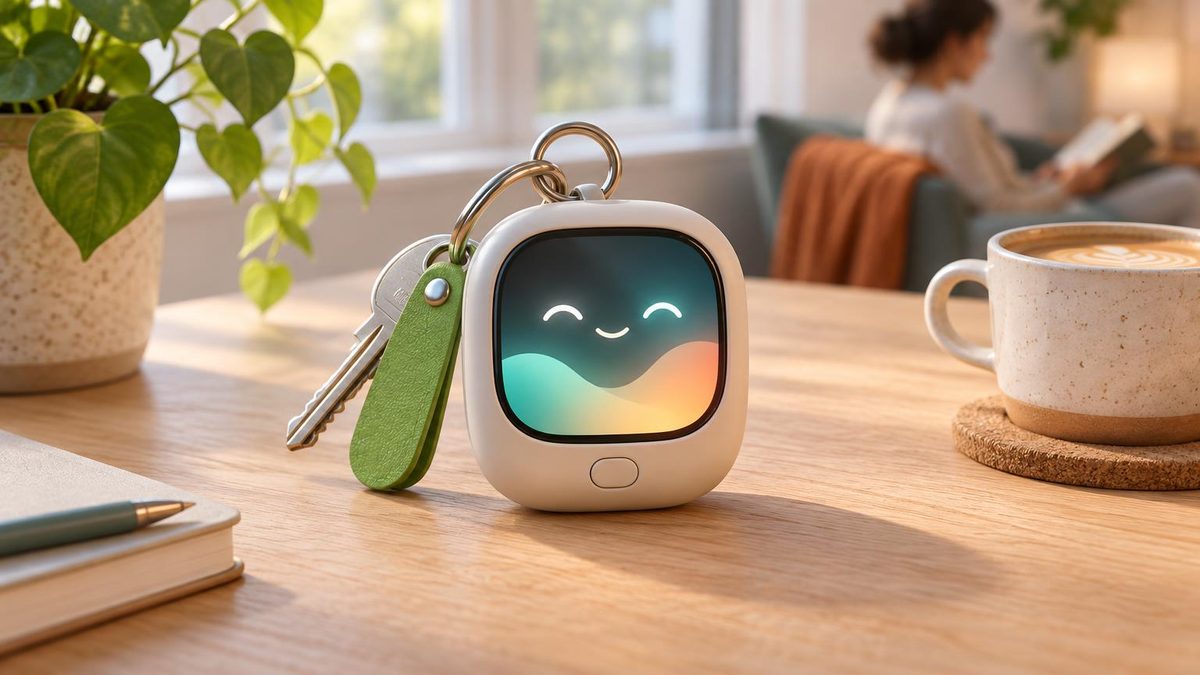
- Meta Muse Charm. Shown at Connect on September 23, 2026, it is a keychain-sized device with a small screen, an animated avatar and a fingerprint sensor to start a conversation with Meta's Muse agent. Zuckerberg said it would be ready to ship for the December holidays. The Information reports a $300 price, which Meta has not confirmed.
- Samsung Intelligent Eyewear. Samsung opened preorders on November 12, 2026 for Gemini-powered glasses made with Warby Parker (from $395) and Gentle Monster ($449 to $489). They go on sale on December 10 in the US and South Korea, and work with recent Galaxy, Pixel and iPhone models. Our comparison of Samsung's AI glasses and Meta Ray-Ban Display puts them side by side.
- Nothing. Carl Pei says Nothing's first AI-native device has "no new screen" and ships in December. The reveal is on December 8.
- OpenAI. After buying Jony Ive's io in 2025, OpenAI is reportedly building a screenless, camera-equipped home speaker. A court filing says it will not ship before the end of February 2027. Our OpenAI and Jony Ive device tracker separates confirmed facts from leaks.
Five lessons from 15 years of AI hardware
- The phone wins ties. Every device that tried to replace the phone outright, from the AI Pin to the R1, lost. The ones that last do one job the phone does badly: hearing you across a room, seeing what you see, or recording a meeting without you touching anything.
- Normal-looking beats futuristic. Google Glass looked like a gadget and struggled. Ray-Ban Meta looked like Ray-Bans and sold millions.
- Cloud-dependent hardware can die. The Humane AI Pin lost its main features overnight when the servers went off. Before you buy, check what still works without the company's cloud and subscription.
- Startups get absorbed. Bee, Limitless and Humane all ended up inside bigger companies within about two years. If you buy from a small brand, expect the product to change hands.
- Privacy is the real cost. From Glass to Friend, the backlash has always been about cameras and microphones pointed at people who did not agree to them. That has not gone away.
The takeaway: if you are tempted by a 2026 AI gadget, wait for independent reviews, check the subscription, and ask what it does better than the phone you already own.
FAQ
What was the first AI hardware device?
There is no single first, but Siri on the iPhone 4S (2011) put a voice assistant in mass-market hardware. The Amazon Echo (2014) was the first popular device built around an assistant.
What happened to the Humane AI Pin?
HP bought most of Humane's assets for $116 million in February 2025. The pins lost their cloud and AI features on February 28, 2025, and are no longer sold.
Is the Rabbit R1 still sold?
Wired reported in September 2026 that Rabbit is no longer manufacturing the R1. Remaining stock may still be available. The company now focuses on its OS3 software.
Why did the AI Pin and Rabbit R1 fail?
They tried to replace the phone but were slower and less reliable than one, and early reviews said many features did not work as promised.
Which AI gadget has sold the most?
Of the AI wearables with public figures, Meta's smart glasses lead. EssilorLuxottica reported 7 million Ray-Ban and Oakley smart glasses sold in 2025 alone.
More on AI gadgets
Sources
Checked on November 28, 2026.
- Apple: Apple Launches iPhone 4S, iOS 5 and iCloud
- MIT Technology Review: Apple's new iPhone would like to talk
- eWeek: Google ending its Google Glass Explorer Edition
- TechCrunch: Amazon Echo is a $199 connected speaker
- Amazon: Amazon Echo now available to all customers
- Engadget: Google Home ships next month for $129
- Meta: Introducing Ray-Ban Stories
- Meta: Introducing the new Ray-Ban Meta smart glasses
- UploadVR: Ray-Ban Meta glasses sold 2 million units
- UploadVR: Meta and EssilorLuxottica sold 7 million smart glasses in 2025
- MacRumors: Humane debuts $700 AI Pin
- TechCrunch: Humane's AI Pin is dead as HP buys startup's assets for $116M
- TechRadar: What exactly is the Rabbit R1?
- iTechPost: Rabbit OS3 launches without the R1
- TechCrunch: Rewind pivots to build an AI-powered pendant
- Engadget: Meta's latest acquisition (Limitless)
- TechCrunch: Amazon acquires Bee
- TechCrunch: Amazon's Bee launches two new personal AI devices
- TechCrunch: Plaud takes a crack at a simpler AI pin
- Plaud: Plaud unveils NotePin S and Plaud Desktop
- Dezeen: Friend AI necklace
- TechCrunch: Friend spent more than $1M on subway ads
- Fortune: Who is Avi Schiffmann
- 9to5Google: Amazon Alexa+ price and Prime
- TechCrunch: Google unveils its Gemini-powered Google Home Speaker
- Meta: Meta Ray-Ban Display, AI glasses with an EMG wristband
- TechCrunch: Meta made a Tamagotchi-like wearable for its Muse AI agent
- TechCrunch: Meta's new Muse Charm device may cost $300
- Samsung: Samsung announces December release for Intelligent Eyewear
- Tech-ish: Nothing will show its first screenless AI device on 8 December
- TechRepublic: OpenAI drops io branding for planned AI hardware