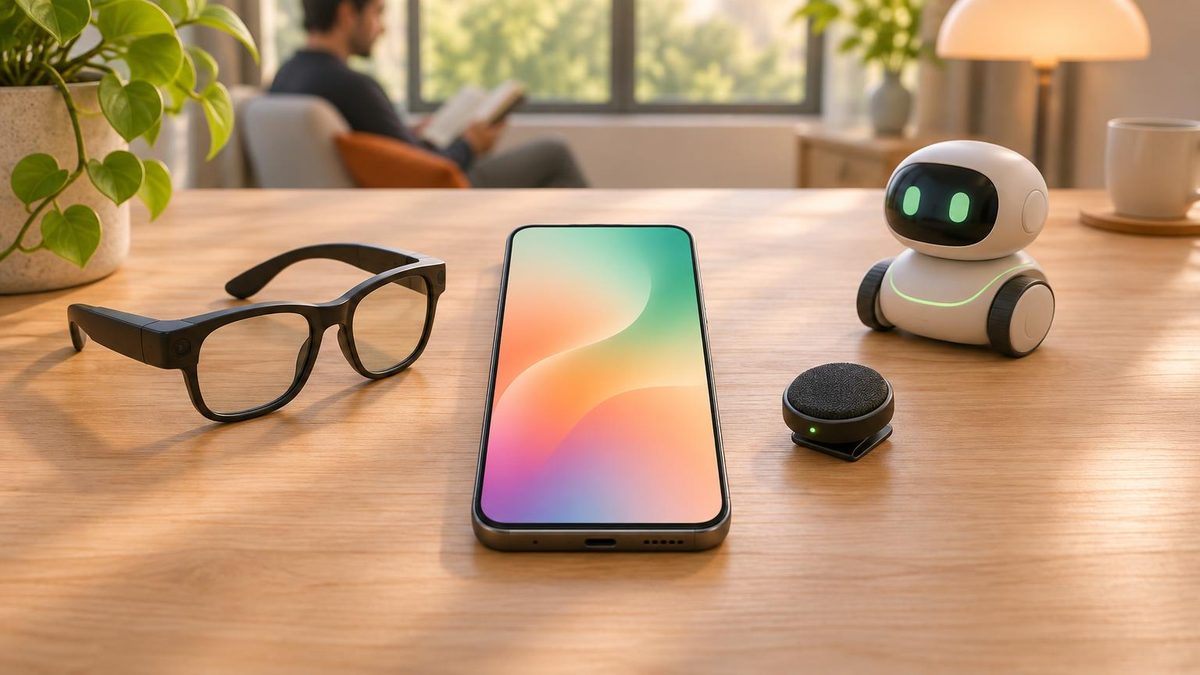
For most people, no: the phone you already own does almost everything an AI gadget promises, from answering questions to identifying what the camera sees to translating a conversation. A dedicated AI device only earns its place for a few jobs a phone does badly, mainly hands-free photos and help on AI glasses, all-day recording of in-person meetings, accessibility for people with low vision, and companionship.
That is a less exciting answer than the launch videos suggest, so this guide shows the working: what Gemini, Siri AI, ChatGPT and Meta AI can do on a phone as of late November 2026, where a separate device really does better, what it all costs, and a simple table of "if you want this, get that (or nothing)."
The short version
- Your phone already covers chat, camera-based questions, call recording and live translation, mostly for free: Gemini Live's camera and screen sharing are free on Android and iPhone, and Apple's Siri AI launched in beta on September 14, 2026 at no extra cost within daily limits.
- AI glasses are the clearest win over a phone, because they see what you see without you holding anything. Ray-Ban Meta (Gen 3) starts at $449, according to Meta.
- A dedicated recorder like the Plaud NotePin ($159) makes sense only if you record long in-person meetings often. For calls, the iPhone and Samsung phones already record and transcribe.
- Companion gadgets (desk robots, AI pendants) are toys or company, not better assistants. Buy them for fun, not for answers.
- If you cannot name the one job a gadget does better than your phone, skip it, and check the subscription before you buy anything.
What your phone already does with AI in late 2026
The big change of the past two years is that the AI assistants on phones caught up with, and passed, most standalone AI gadgets. Here is what is built in or one free app away right now. For the full rundown of devices, see our roundup of the best AI gadgets.
Android: Gemini, Circle to Search and Live Translate
Gemini is now the default assistant on Android phones. Google began switching eligible phones from Google Assistant to Gemini in September 2026, and long-pressing the power button now opens Gemini, according to Android Authority and Android Headlines. Gemini Live, the voice mode, lets you share your camera or screen and talk about what it sees, and Google made that free for all Android users back in April 2025.
Circle to Search lets you circle anything on the screen to search it, and Google says it runs on more than 300 million Android devices. On the new Pixel 11, Google added Circle to Search inside the camera viewfinder and a Live Translate feature that translates videos and audio in real time. Samsung's Galaxy AI adds Live Translate for phone calls, which runs on the device, plus Transcript Assist for recordings, and Samsung says its own Galaxy AI features are free for now.
iPhone: Siri AI and Apple Intelligence
Apple's long-delayed Siri upgrade arrived with iOS 27 on September 14, 2026. Apple calls it Siri AI, and it is still labelled beta. It adds a Siri app with saved conversations, follow-up questions, answers about what is on your screen, searches through your messages, emails and photos, and a Siri mode in the Camera app that identifies what is in front of you. Apple says the Apple Foundation Models behind it were developed in collaboration with Google and Gemini, though iOS 27 does not run the Gemini app itself.
There are limits. Siri AI needs an iPhone 15 Pro or newer, it is not available in the EU or China yet, and it is not available to users under 13. It launched in English, and on October 26, 2026 Apple added French, Japanese, Korean, Portuguese and Spanish. It is free within daily usage limits, but Apple says "expanded access to such features will be available for a fee in the future." Separately, iPhones already record and transcribe phone calls in the Notes app and do Live Translation in the Phone, FaceTime and Messages apps, and with AirPods for in-person chats.
ChatGPT and Meta AI apps
The ChatGPT app works on any phone and offers a voice mode called Live. OpenAI's help center says free users get limited access, Go ($8 a month) and Plus ($20 a month) users get up to 3 hours, and Pro gets more. One catch for gadget-style use: Live does not support video or screen sharing. That stays only in the older Advanced voice mode for paid subscribers, and OpenAI says Advanced and Standard voice retire on December 11, 2026.
The Meta AI app now runs on Meta's Muse Spark model, which Meta announced in April 2026, and it is the required companion app for Meta's AI glasses. Meta also launched Muse, a separate personal agent app, in September 2026. If you want to compare how these assistants perform on wearables, we break that down in Gemini vs Meta AI vs ChatGPT on wearables.
| Job | Android | iPhone | Extra cost |
|---|---|---|---|
| Ask questions by voice | Gemini, Gemini Live | Siri AI (beta), Gemini or ChatGPT app | Free tiers; paid plans from $8 a month |
| Ask about what the camera sees | Gemini Live camera, Circle to Search in Camera (Pixel 11) | Siri mode in Camera, Gemini Live camera | Free |
| Search what is on screen | Circle to Search | Siri onscreen awareness, Google app Lens | Free |
| Translate a conversation | Galaxy AI Live Translate, Pixel Live Translate | Live Translation in Phone, FaceTime, Messages, AirPods | Free, needs a supported phone |
| Record and summarize calls | Galaxy AI Transcript Assist | Notes call recording, summary with Apple Intelligence | Free |
Where a phone still falls short
Phones lose in three situations, and every good AI gadget is built around one of them.
- Your hands are busy. Cooking, cycling, carrying a child, fixing a bike. Pulling out a phone and pointing the camera is the whole problem.
- It needs to run for hours. Recording a full workday of meetings drains a phone and ties it up.
- It needs to be there without being asked. A robot pet on the desk or a device that greets someone who lives alone does something a phone in a drawer cannot.
Outside those three, the gadget is usually a second, worse screen for the same AI. That is the main lesson of the Rabbit R1 and the Humane AI Pin, which HP bought the assets of in February 2025 before the pins stopped working on February 28, 2025. We go through what changed since in Muse Charm vs Rabbit R1 vs Humane AI Pin.
The four jobs where a dedicated AI gadget wins
1. Hands-free camera and help: AI glasses
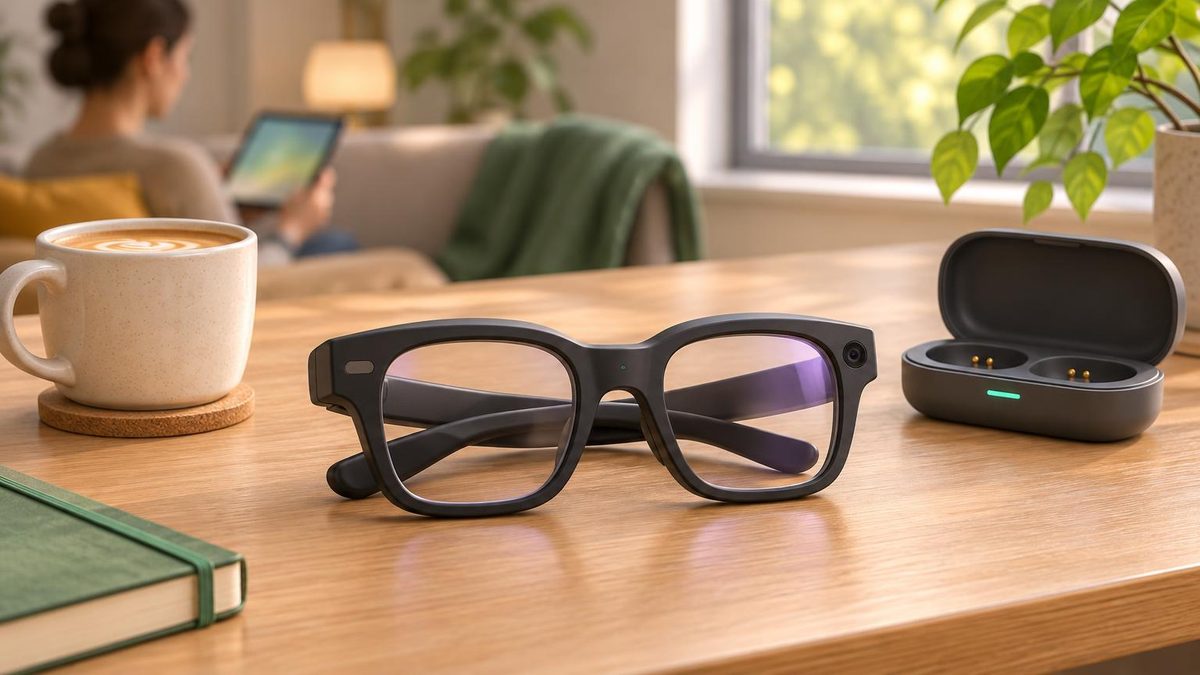
This is the strongest case. Glasses with a camera can take photos and video from your point of view and answer "what am I looking at" without you holding anything. Meta's Ray-Ban Meta (Gen 3) went on sale on September 23, 2026 starting at $449, and the camera-free Ray-Ban Meta Audio starts at $349 if you only want audio and the assistant. Our guide to the best AI smart glasses compares Meta's range with Samsung, Even Realities and others.
2. Recording long in-person meetings
For phone calls, you do not need anything: the iPhone and Samsung phones record and transcribe them already (tell the other person first, and check local consent rules). A dedicated recorder makes sense if you sit in long face-to-face meetings, lectures or interviews several times a week. The Plaud NotePin costs $159 and includes 300 free transcription minutes a month, with a Pro plan at $8.33 a month for 1,200 minutes, according to TechCrunch. Compare the options in our list of the best AI voice recorders.
3. Accessibility
For people who are blind or have low vision, hands-free matters even more. Be My Eyes works on Ray-Ban Meta and Oakley Meta glasses: you can say "Hey Meta, Be My Eyes with" a friend or family member's name to start a hands-free video call, and Be My Eyes says the service is free to the glasses user. Meta says the glasses can also describe surroundings, read text and identify objects out loud. A phone can do similar things, but only if you hold it up and aim it.
4. Companionship, and kids
A phone is a terrible pet. Desk robots like Emo ($289 on Living AI's store) or Casio's furry Moflin ($429) exist to be present, cute and reactive, and some families like them as a screen-free toy. ElliQ, leased in the US for a $249 setup fee plus a monthly membership, starts conversations and handles family video calls for someone who lives alone. None of these is a better assistant than your phone; they are a different kind of product, which we cover in our guide to AI desk companion robots. For kids, note that phone chatbots have age rules too: Siri AI is not available to users under 13.
What an AI gadget really costs
The hardware price is the easy part. Ask what it needs every month and what still works without it.
| Option | Up front | Ongoing | Notes |
|---|---|---|---|
| Phone assistants you already have | $0 | $0 on free tiers | ChatGPT Go $8 or Plus $20 a month, Google AI Pro $19.99 a month if you want more |
| Ray-Ban Meta (Gen 3) | From $449 | Needs the Meta AI phone app | Camera, speakers and assistant |
| Ray-Ban Meta Audio | From $349 | Needs the Meta AI phone app | No camera |
| Plaud NotePin | $159 | 300 free minutes a month, Pro $8.33 a month | For long in-person recordings |
| Emo desk robot | $289 | None listed | A pet, not an assistant |
| Friend 2.0 pendant | $249 | $9.99 a month to remember past 30 days | Always listening, iPhone only |
| Meta Muse Charm | Not announced, reportedly $300 | Reportedly up to 12 months of free Verizon 5G | Not on sale yet |
Meta has said the Muse Charm will arrive in time for the holidays, but the $300 price and the Verizon data deal come from a report by The Information, not from Meta.
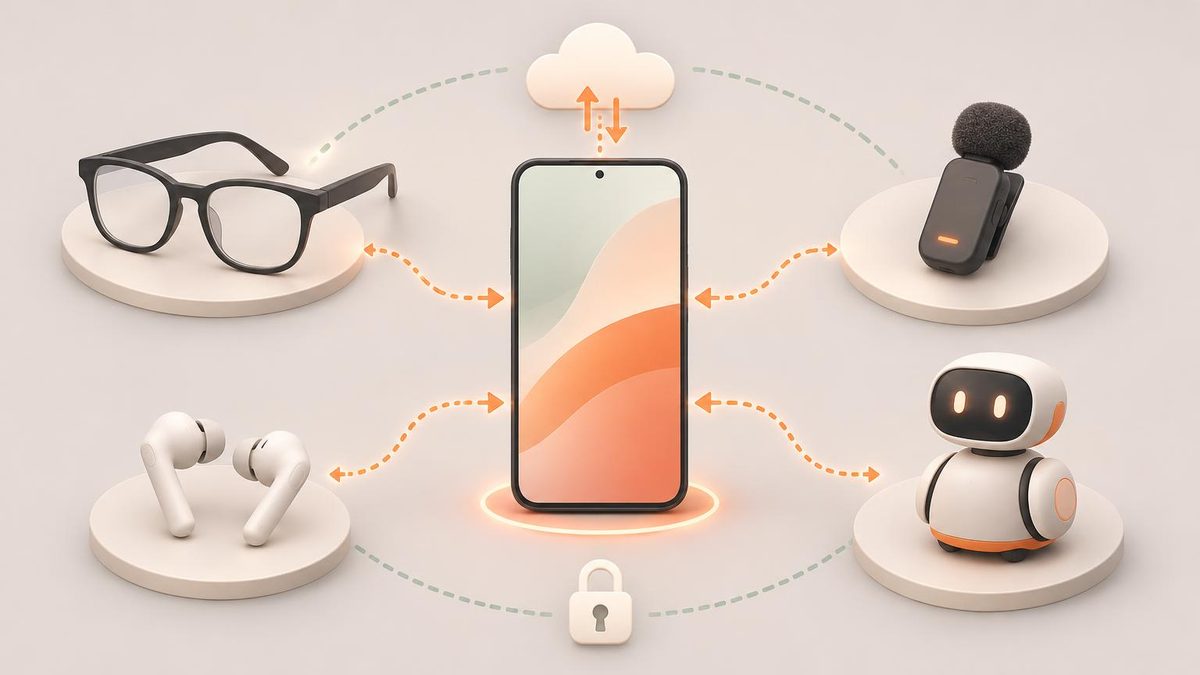
Notice that almost every gadget on that list still needs your phone for setup, an app or a connection. You are not replacing the phone, you are adding to it.
Decision table: if you want X, get Y (or nothing)
| If you want to... | Get this |
|---|---|
| Ask questions, write messages, plan trips | Nothing new. Use Gemini, Siri AI or the ChatGPT app on your phone. |
| Identify a plant, product or sign | Nothing new. Gemini Live camera, Circle to Search or Siri mode in Camera. |
| Translate a conversation abroad | Nothing new if you have a recent iPhone with AirPods, a Galaxy or a Pixel. |
| Record and summarize phone calls | Nothing new. Notes on iPhone, Transcript Assist on Galaxy. |
| Record hours of in-person meetings every week | A dedicated AI voice recorder. |
| Take photos and ask about what you see, hands-free | AI glasses with a camera. |
| Music, calls and an assistant in your glasses, no camera | Camera-free audio glasses. |
| Help with sight loss | AI glasses with Be My Eyes support. |
| A cute robot for your desk or kids | A desk robot pet, if you want a toy. |
| A proactive companion for a relative living alone in the US | ElliQ, knowing it is a monthly lease. |
| An always-on memory of everything you say | Probably nothing. Think about the people you would be recording. |
| The newest pocket AI gadget | Wait for reviews of shipping hardware before you pay. |
Five questions to ask before you buy any AI gadget
- What one job does it do better than my phone? If the honest answer is "it is the same AI on a smaller screen," skip it.
- What is the subscription, and what stops working without it? Memory, transcription minutes and cellular data are the usual paywalls.
- Who else is it recording? Always-on microphones and cameras record the people around you, and consent laws vary. Check the privacy settings and the law where you live first.
- What happens if the company folds? Humane's AI Pin lost its calling, messaging and AI features when the servers shut down in 2025.
- Will my phone get this feature next year anyway? Live translation, camera search and call summaries all started as gadget pitches and now ship free on phones.
Our take
Start with what you already own. Spend a week using Gemini Live, Siri AI or ChatGPT's voice mode for real tasks, and notice when you wish your hands were free or your phone were somewhere else. If that happens a lot, AI glasses are the gadget most likely to earn their price. If you record long meetings, a recorder pays off. If you want something charming on the desk, buy a robot pet and enjoy it as a toy. For everything else, your phone is enough, and it gets smarter with every update without asking for another monthly fee.
FAQ
Is my phone enough for AI?
For most tasks, yes. Gemini on Android, Siri AI and Apple Intelligence on iPhone, and the ChatGPT app all handle questions, writing, camera-based search and translation. A separate gadget only wins when you need hands-free use, long recordings or a device that is always present.
What is the best AI gadget if I only buy one?
For most people it is a pair of camera AI glasses, because they do something a phone cannot: see what you see while your hands stay free. Ray-Ban Meta (Gen 3) starts at $449.
Do AI gadgets need a subscription?
Many do. Friend charges $9.99 a month for long-term memory, Plaud sells more transcription minutes, and ElliQ is a monthly lease. Phone assistants have free tiers, with paid plans like ChatGPT Plus at $20 a month and Google AI Pro at $19.99 a month.
Does the new Siri work on every iPhone?
No. Siri AI needs an iPhone 15 Pro, iPhone 15 Pro Max or iPhone 16 or later. It is still in beta, and Apple says it is not yet available in the EU or China.
Should I buy the Meta Muse Charm?
Not yet. It has not shipped, and Meta has not announced a price. Wait for reviews of the final hardware and the real subscription terms.
More on AI gadgets
Sources
Checked on November 28, 2026.
- Apple Newsroom: Siri AI, a profoundly more capable and personal assistant, is here
- Apple Newsroom: Siri AI is available in more languages starting today
- Apple Newsroom: New Apple Intelligence features are available today (Live Translation)
- Apple Support: How to record and transcribe a call on iPhone
- Google: 7 can't-miss updates from our Pixel 11 launch
- Engadget: Gemini Live video and screen sharing is now free for Android users
- Engadget: Screen and camera sharing in Gemini Live is heading to all Android and iOS devices
- Android Authority: Google is now killing Assistant in favor of Gemini
- Android: Circle to Search
- Samsung: Galaxy S26 AI experience
- OpenAI Help Center: Live FAQ
- OpenAI: Introducing ChatGPT Go
- Meta: Introducing Muse Spark
- Meta: Introducing Ray-Ban Meta Audio and more AI glasses styles
- Meta: Our AI wearables are changing the game for disabled people
- Meta: AI glasses for blind and low vision users
- Be My Eyes: Be My Eyes and Meta launch new accessibility functions
- Android Central: Siri's biggest upgrade in years comes with help from Gemini
- Engadget: Meta's Muse Charm will reportedly cost $300 and come with free Verizon 5G
- TechCrunch: The hottest AI wearables and gadgets you should know about
- TechCrunch: Humane's AI Pin is dead as HP buys startup's assets for $116M
- TechCabal: Google's new AI subscription plans explained