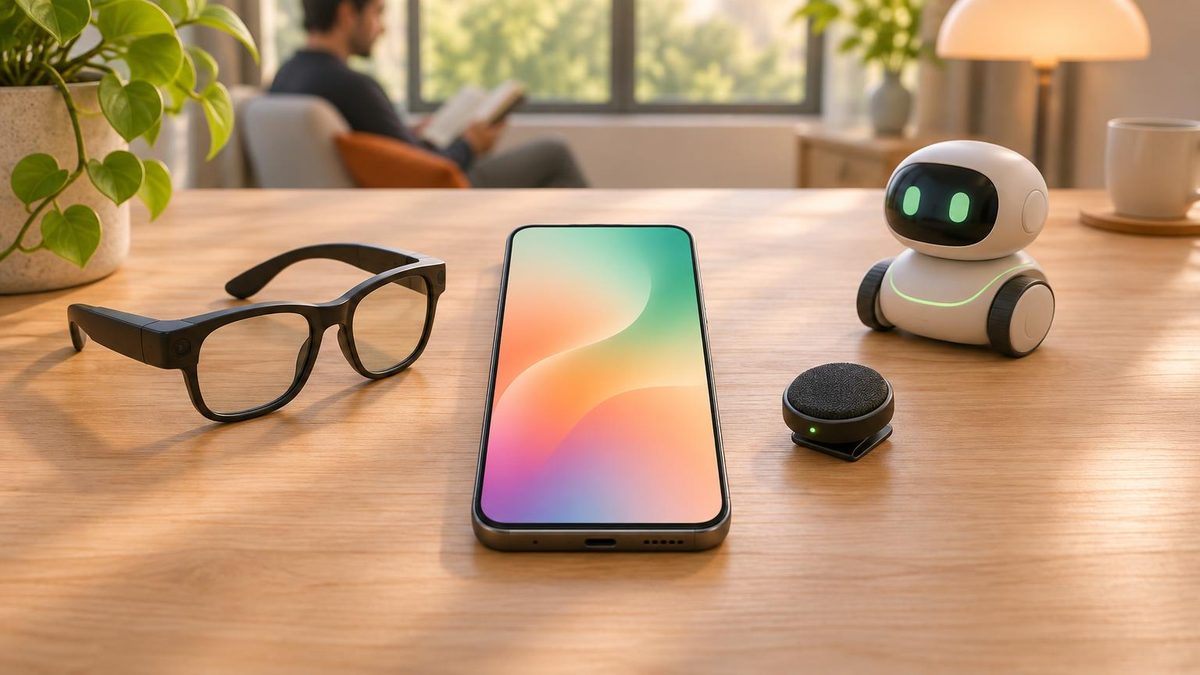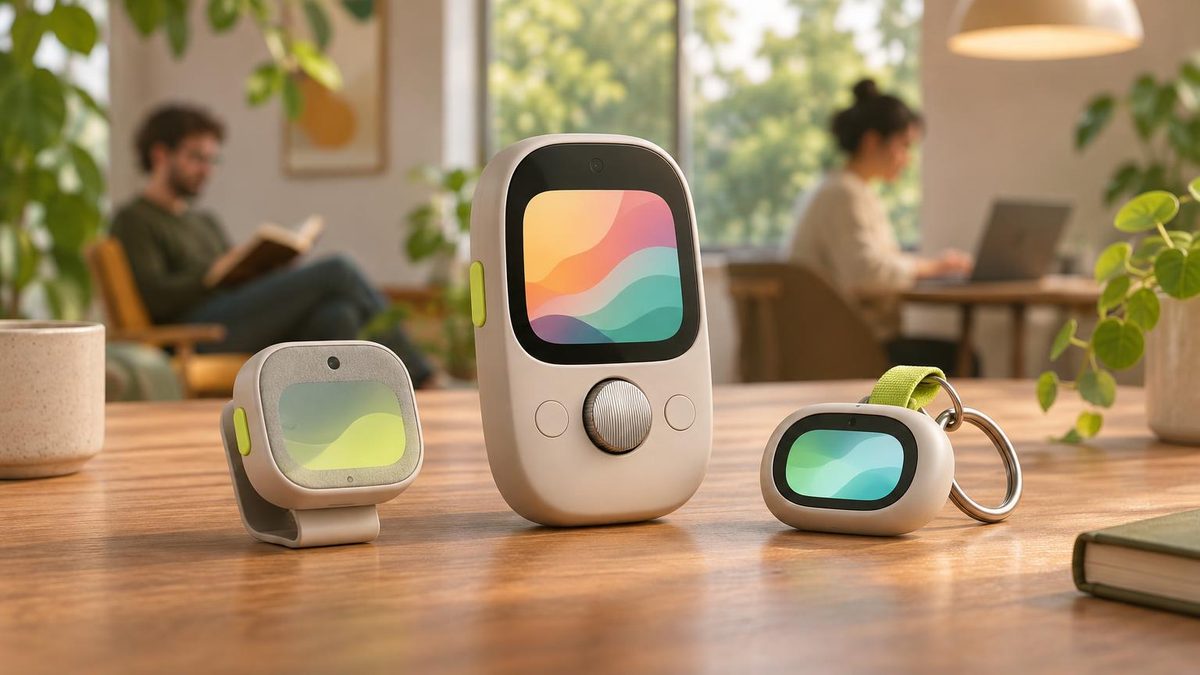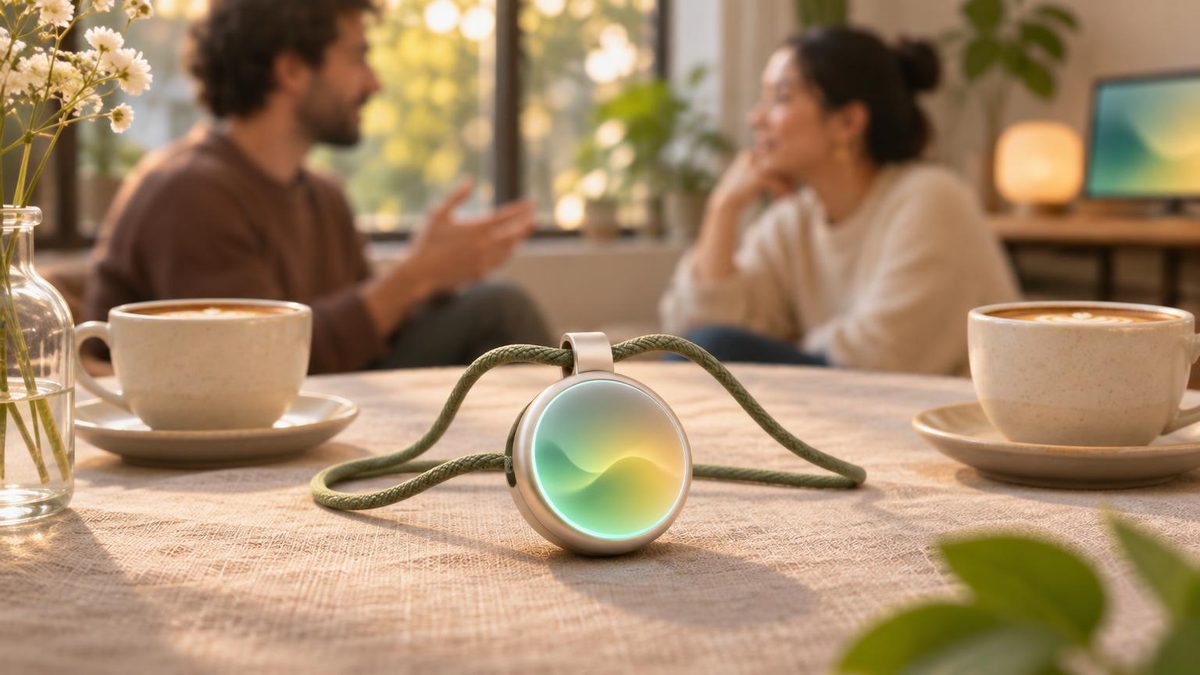
The biggest privacy risk of an always-listening AI wearable is not what it hears from you, it is what it hears from everyone else, and where that goes next. Most of these devices send audio or transcripts to a cloud server, many keep them until you delete them, and some vendors can use them to improve their AI unless you change a setting.
That does not make every AI pendant, recorder or pair of glasses a spy. Policies differ a lot, and a few devices keep almost everything on your phone. This guide explains what these gadgets record, where the data goes, how long it is kept, what the big vendors say about training, what the law says about recording other people, and which settings to change today. If you are still choosing a device, start with our overview of the best AI gadgets right now.
The short version
- In the US, Meta stores voice recordings from its AI glasses by default, keeps them for up to a year, and offers no switch to stop that storage, only a delete button.
- Plaud says it does not train AI on your recordings without explicit opt-in consent, and its cloud sync is off by default.
- Amazon says Bee deletes audio right after transcribing it and encrypts transcripts with keys your device controls, but its Bee pages do not say whether transcripts can be used for training.
- US federal law allows recording with one party's consent, but about 11 states require everyone's consent. In the EU, national laws can make secret recording a crime. This is not legal advice.
- The single best habit: tell people when your device is listening, and take it off in bathrooms, clinics and private conversations.
What always-listening AI wearables actually record
"Always listening" covers four quite different designs, and the privacy risk grows with each one:
- Push-to-talk: rings like the Pebble Index 01 and Sandbar Stream only record while you hold a button or touchpad. They capture your own short notes, not the room.
- Session recorders: Plaud, Comu and SwitchBot devices record when you start them, usually for a meeting or a call, and capture everyone in range. Plaud's Note Pro claims pickup up to 16.4 feet.
- All-day listeners: Bee and Omi are designed to run through your day and turn conversations into summaries, memories and to-dos. Everyone you talk to is in the data.
- Camera glasses: Meta's Ray-Ban glasses listen for a wake word, and capture photos, video and audio when you ask. Their AI can also analyse what the camera sees.
| Device | When it listens | What is kept | Where it is processed |
|---|---|---|---|
| Pebble Index 01 | Only while the button is held | Short voice notes | On your phone (optional cloud) |
| Plaud Note Pro / NotePin S | When you start a recording | Audio on the device, transcripts in the app | Third-party AI providers in the cloud |
| Amazon Bee Frontier | All day, until muted or auto-off | Transcripts and summaries, not audio | Bee Private Compute on AWS |
| Omi | All day while worn | Transcripts, memories | Your phone or Omi's cloud |
| Ray-Ban Meta glasses | Wake word, button, or when capturing | Voice interactions, photos, video | Meta's cloud |
For the devices themselves, prices and battery life, see our ranking of the best AI voice recorders.
Where your audio and transcripts go
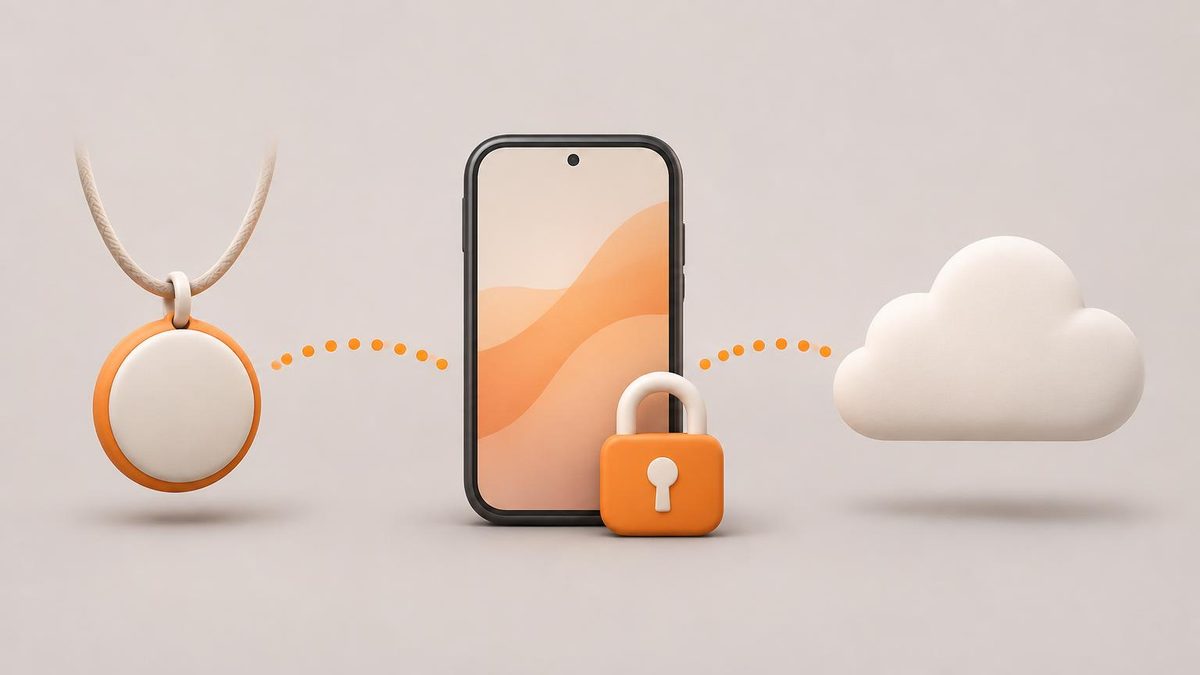
Almost no AI wearable does the heavy AI work on the device. The usual path is: microphone, then Bluetooth to your phone, then the vendor's servers or a third-party model, then back to your app as a transcript and summary. Each step is a place data can be kept.
- Plaud sends audio to outside AI service providers under data processing agreements. With Private Cloud Sync off (the default), Plaud says your files stay on your device, though the data needed for each AI request still leaves it. With sync on, data sits in Plaud's servers in the US, Germany, Japan or Singapore.
- Amazon Bee runs on what Amazon calls Bee Private Compute, an isolated AWS environment that Amazon says "no one, including Amazon and Bee, can access". Audio is processed in real time and deleted; transcripts are encrypted with keys your device creates.
- SwitchBot's AI MindClip uses Alibaba Cloud speech recognition, according to Android Headlines, and has no offline mode.
- Comu routes requests to several models, including Claude, ChatGPT, Gemini and Whisper, according to Notebookcheck.
- Pebble runs open-source speech-to-text on your phone, with cloud processing as an option.
The practical lesson: "encrypted" and "secure" on a product page tell you how data travels, not who can use it. For that you need the retention and training rules.
How long it is kept, and who else sees it
Meta is the clearest example, because its policy is written down. Its AI Glasses Voice Privacy Notice (effective July 22, 2025) says transcripts and audio of your voice interactions "are stored by default to help improve Meta's products", are kept "for up to one year", and that accidental activations Meta detects as false wakes are deleted within 90 days. It also says "trained reviewers" help evaluate how the products respond to your voice. Meta removed the US option to turn voice storage off in April 2025.
Human review has already caused trouble. In March 2026, after the Swedish paper Svenska Dagbladet reported that contractors in Kenya had seen intimate footage while labelling Ray-Ban Meta videos, a proposed class action was filed in federal court in San Francisco. Meta confirmed to Engadget that "we sometimes use contractors to review this data" when people share content with Meta AI. In October 2026, a Reddit user reported glasses saving ordinary conversations without the wake word; Meta said the issue was resolved, without naming a cause.
Other vendors are less specific. Plaud keeps cloud data until you delete it or turn sync off. Limitless lets you set an audio retention period from one day to forever. Amazon says Bee audio is never stored, but transcripts stay until you delete them.
Training opt-outs: what each vendor says
| Vendor | Is your data used to improve AI? | Can you opt out? | What to do |
|---|---|---|---|
| Meta glasses, voice (US) | Yes, stored by default to improve products, up to 1 year | No switch; delete recordings manually | Clear the voice activity log regularly |
| Meta glasses, voice (UK, Ireland, Germany) | Only if you choose to store recordings | Yes, storage can stay off | Leave voice storage off |
| Meta glasses, camera | Visual data can be kept for training | Yes, since September 2026 | Turn off "Store visual data from AI experiences" |
| Plaud | No, unless you give explicit consent | Opt-in only | Do not opt in; keep cloud sync off for sensitive files |
| Amazon Bee | Not stated on Amazon's Bee pages | Not stated | Delete transcripts you do not need |
| Limitless (now Meta) | Continuing users had to accept updated terms | Not stated | Export and delete your data |
| Sandbar Stream | Sandbar says partner models do not train on your data | Not needed | Request deletion if you stop using it |
The UK and US versions of Meta's notice really do differ. According to a VR.org comparison, the UK text reads "You can choose to store your voice recordings to help improve other Meta products" and "Even with voice recording storage off, you can still use the Meta AI service." The Canadian and Australian versions match the US text. If you are curious how this policy carries over to Meta's next devices, our explainer on what the Meta Muse agent is covers where it runs.
When the company changes hands
A privacy policy is only as stable as the company behind it. Two of the best-known AI pendant makers were bought by big tech companies in 2025:
- Limitless was acquired by Meta, and stopped selling its Pendant on December 5, 2025. Service ended in the EU, UK, Brazil, China, Israel, South Korea and Turkey, and users there had until December 19, 2025 to download their data before it was deleted. Everyone else had to agree to an updated privacy policy and terms to keep using it, with support promised "throughout 2026".
- Bee was bought by Amazon in July 2025 and relaunched with new hardware on October 15, 2026.
Amazon has also shown that local-processing promises can be withdrawn: in March 2025 it ended the Echo setting that let some users keep voice requests from being sent to the cloud, saying generative AI features needed its cloud. The takeaway is simple: export your data now and then, and do not record anything you would hate to see under a new owner's terms.
Recording consent laws, in plain terms
This is general information, not legal advice. Laws vary by state and country and change over time. If you record for work, ask your employer or a lawyer.
United States. Federal law is "one-party consent": you can record a conversation you are part of. But according to the Reporters Committee for Freedom of the Press, about 11 states mainly require all-party consent: California, Delaware, Florida, Illinois, Maryland, Massachusetts, Michigan (at least for third-party recordings), Montana, New Hampshire, Pennsylvania and Washington. Some states split the rule: Missouri and Oregon require everyone's consent for in-person talks but not phone calls, while Connecticut and Nevada are the reverse. For in-person conversations, many laws only apply where people expect privacy, which is why a quiet office meeting is riskier than a busy street.
European Union. The GDPR does not cover data processed "by a natural person in the course of a purely personal or household activity", so recording your own voice notes is generally outside it. Recording other people is another matter, and national criminal laws can apply. Germany's Section 201 of the Criminal Code, for example, makes recording someone's non-public spoken words without authorization a crime punishable by up to three years in prison or a fine. Once recordings are used at work or shared, data protection rules are likely to apply as well.
The safe rule everywhere: if the conversation is private, get everyone's consent first.
A checklist of settings to change today
| Device | Setting | Why |
|---|---|---|
| Ray-Ban Meta | Meta AI app, your glasses, Meta AI, "Hey Meta": off | Fewer accidental activations; the touchpad still works |
| Ray-Ban Meta | Glasses privacy, Cloud media: off | Photos and videos stay on the glasses until you import them |
| Ray-Ban Meta | Glasses privacy, Share additional data: off | Stops usage analytics |
| Ray-Ban Meta | Meta AI, "Store visual data from AI experiences": off | Keeps camera data out of training and human review |
| Ray-Ban Meta | Glasses privacy, Voice activity log: delete | The only way to remove stored US voice recordings |
| Plaud | Private Cloud Sync: off for sensitive recordings; never opt in to training | Files stay on your device |
| Bee Frontier | Auto-off after silence (for example 5 or 15 minutes); use the mic button | Less recording you did not mean to make |
| Limitless Pendant | Audio retention: 1 day; export, then delete your data | Support is only promised through 2026 |
Engadget, which listed the four Meta settings in October 2026, warns that turning off Cloud media disables voice photo sharing and autocapture, and visual reminders may stop working without visual data storage. On any device, also check the phone app's microphone, location and contacts permissions, and turn off integrations you do not use. Many of these settings work without a paid plan; our guide to AI gadgets without a subscription lists what each free tier includes.
Etiquette: how not to be that person
- Say it out loud. "I'm recording this so I can get notes, is that OK?" takes four seconds. A blinking light is a signal, not consent.
- Take it off in private places. Bathrooms, changing rooms, clinics, therapy sessions, children's events and other people's homes.
- Ask before meetings, not during. Put it in the invite. Some workplaces ban recorders outright.
- Do not share what others said without asking, even as an AI summary.
- Be extra careful with emotional devices. Pendants sold as companions, like Friend, are designed to hear how you feel. We looked at the limits of emotional AI in our piece on therapy bots and the uncanny valley.
Camera glasses deserve the most care, because bystanders cannot tell what is being captured. Before you buy a pair, our guide to the best AI smart glasses compares what each one records.
FAQ
Do AI wearables record all the time?
Some do. Bee and Omi are designed to listen through the day. Plaud and similar recorders only record when you start them, and rings like the Pebble Index 01 only while you hold the button.
Does Meta use my Ray-Ban Meta voice recordings to train AI?
In the US, Meta stores voice interactions by default "to help improve Meta's products" for up to a year, with no switch to stop it. You can delete them in the Meta AI app. In the UK and parts of the EU, storage is optional.
Is it illegal to record a conversation with an AI pendant?
It can be. About 11 US states require everyone's consent, and some European countries treat secret recording of private conversations as a crime. This is not legal advice; ask first to be safe.
Which AI wearable is the most private?
On paper, push-to-talk devices that process on your phone, such as the Pebble Index 01, expose the least. Among cloud recorders, check for opt-in training, default-off cloud sync and audio deletion.
More on AI gadgets
Sources
Checked on November 28, 2026.
- Meta: AI Glasses Voice Privacy Notice
- TechCrunch: If you own Ray-Ban Meta glasses, double-check your privacy settings
- Engadget: 4 Ray-Ban Meta privacy settings you should change
- Engadget: Meta hit with a class action lawsuit over smart glasses privacy claims
- VR.org: Meta's fix for unprompted glasses recordings
- Plaud: AI Data Usage Transparency Policy
- Amazon: Bee Private Compute
- Amazon: Bee Frontier and Bee Eclipse
- Limitless: Limitless has been acquired by Meta
- Limitless: Privacy
- Sandbar: Stream ring
- Pebble: Meet Pebble Index 01
- Android Headlines: SwitchBot debuts AI MindClip
- Notebookcheck: Comu Action Pro review
- TechCrunch: Amazon's Echo will send all voice recordings to the cloud
- Reporters Committee for Freedom of the Press: Reporter's Recording Guide
- GDPR Article 2: Material scope
- German Criminal Code: Section 201
- TechCrunch: The hottest AI wearables and gadgets