OpenAI and Jony Ive have not announced their first device yet. OpenAI has confirmed a few things in public and in court: it bought Ive's hardware startup io in 2025, the product will not be called "io", and it will not ship to customers before the end of February 2027. Everything else, including the most detailed reports that it is a small, screenless, battery-powered home speaker with a camera, comes from leaks.
This explainer keeps the two piles apart, then covers the iyO and Apple lawsuits that keep shaping the project. If you want something you can buy today, see the best AI gadgets you can buy now.
The short version
- Confirmed: OpenAI merged with io Products, the startup Jony Ive co-founded, in a deal announced on May 21, 2025 and completed in July 2025. Reports value it at about $6.5 billion. LoveFrom, Ive's design firm, stays independent and leads design.
- Confirmed in a court filing: the first device will not ship to customers before the end of February 2027, and OpenAI will not use the names "io" or "iyO" for its hardware.
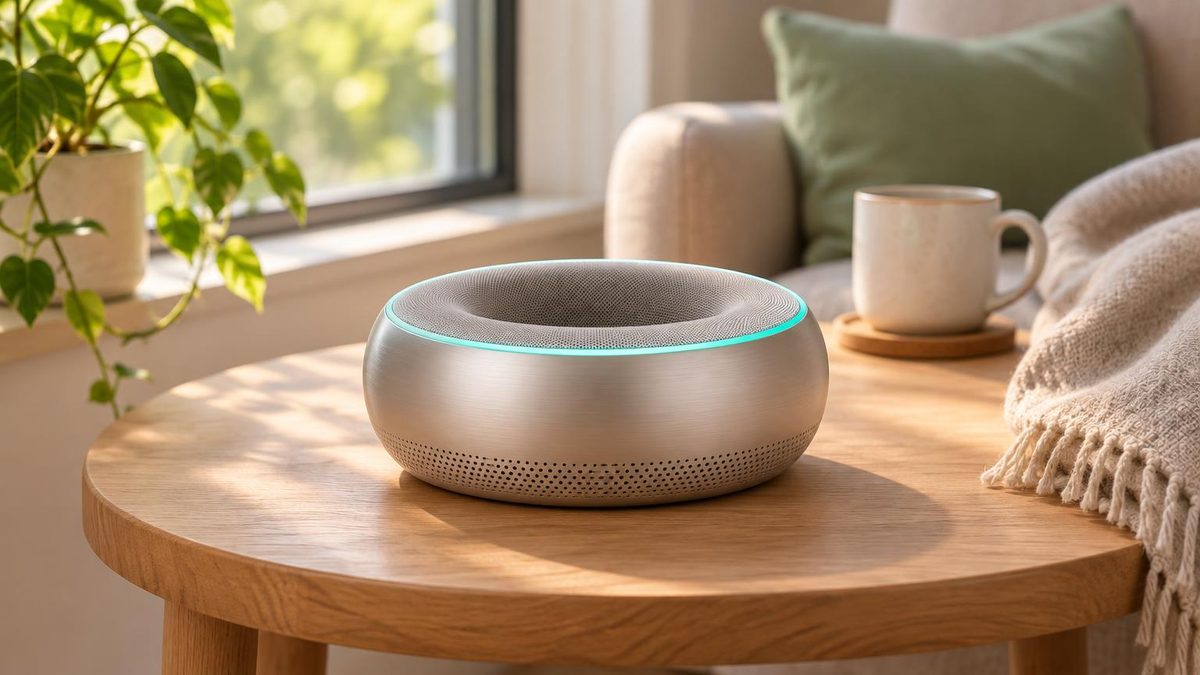
- Reported by Bloomberg: the first product is a doughnut-shaped, screenless smart speaker about the size of a hockey puck, with a battery, a camera, moving parts and a price of roughly $300 to $400.
- Earlier reports of "Sweetpea" earbuds and a "Gumdrop" pen are still unconfirmed. OpenAI's only shipping hardware so far is the Codex Micro, a $230 keypad for developers.
- Apple sued OpenAI over trade secrets in July 2026. OpenAI filed a countersuit on November 27, 2026. Trial is set for July 2027.
Status on November 28, 2026: not announced, no name, no official price, shipping no earlier than March 2027.
What OpenAI has actually confirmed
The confirmed list is short. On May 21, 2025, Sam Altman and Jony Ive published a joint letter saying the io team would merge with OpenAI. An update on the same page, dated July 9, 2025, says the merger closed and that "Jony Ive and LoveFrom remain independent and have assumed deep design and creative responsibilities across OpenAI." io's co-founders were Ive, Scott Cannon, Evans Hankey and Tang Tan. The roughly $6.5 billion price comes from press reports, not OpenAI.
In November 2025, on stage with Laurene Powell Jobs at an Emerson Collective event, Altman said, "Finally, we have the first prototypes," and Ive said he expected to reveal the product in "two years or less." Altman compared the feeling they want to "sitting in the most beautiful cabin by a lake," but neither said what the device is.
In January 2026, Chris Lehane, OpenAI's chief global affairs officer, told an Axios event in Davos that the company was "looking at something in the latter part" of 2026, calling that the "most likely" timeline.
The firmest statements came from court. In a February 2026 filing in the iyO trademark case, OpenAI vice president Peter Welinder said the first hardware device "will not ship to customers before the end of February 2027," that OpenAI had not yet made packaging or marketing material, and that it would not use "io" or "IYO" in any capitalization for its products. The filing also described an early prototype as a screenless device meant to sit on a desk next to a phone and laptop.
Why it is not called io: the iyO trademark case
iyO is a Google-backed startup that makes custom-molded, AI-enabled earpieces. Within weeks of the May 2025 announcement, it sued for trademark infringement, arguing that "io" and "iyO" sound the same and cover similar products. A federal judge granted a temporary restraining order in June 2025, and OpenAI pulled the announcement video and the io branding from its website.
The case produced the first real details about the device. In a June 2025 declaration, Tang Tan wrote that the first product "is not an in-ear device, nor a wearable device," and the filings said it was "at least a year away from being offered for sale."
The Ninth Circuit upheld the restraining order in December 2025, and in February 2026 OpenAI told the court it was dropping the name. A replacement name has not been announced.
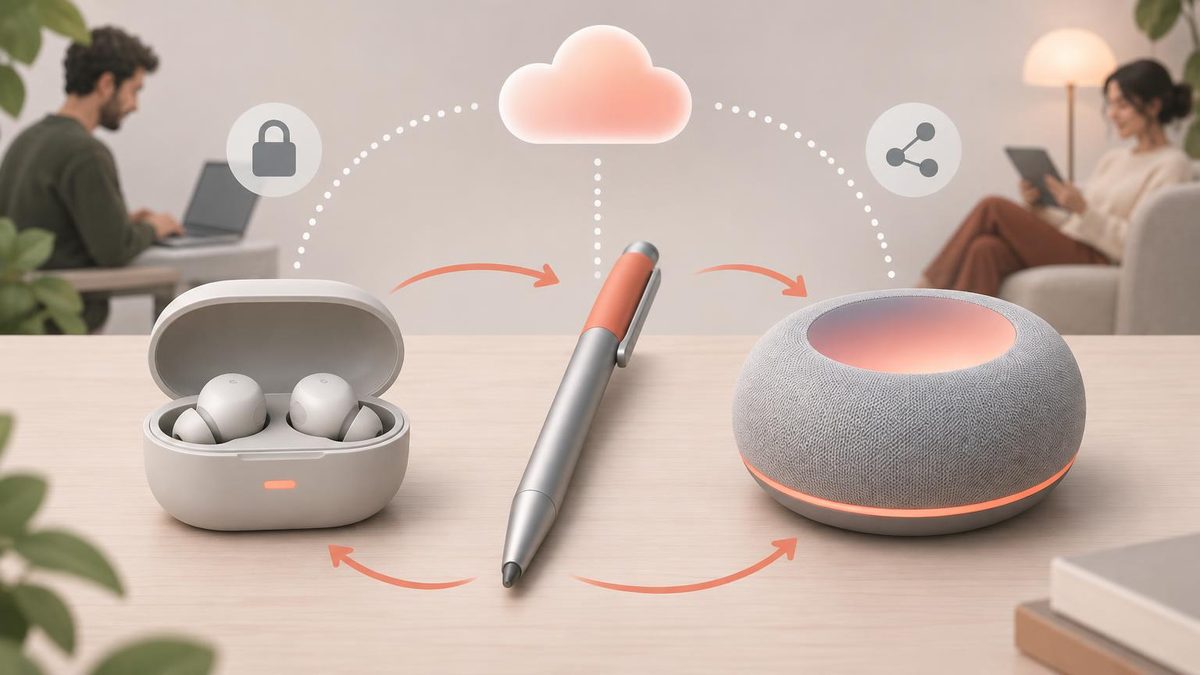
What the first device reportedly looks like
Reports have moved around, so here they are in order. None of this is confirmed by OpenAI.
- May 2025, The Wall Street Journal: after a staff meeting, the paper reported that Altman called the product a "third core device" next to a laptop and phone, pocket-sized, aware of its surroundings and screen-free, and that OpenAI wanted to ship 100 million units faster than anyone before.
- January 2026, Asian supply-chain reports: a leak described earbuds code-named "Sweetpea" with a custom 2nm chip, and Taiwan's Economic Daily reported a first-year target of 40 to 50 million units. Another described "Gumdrop," possibly a pen with a camera and microphone. Tan's sworn statement makes earbuds an unlikely first product.
- February 2026, The Information: the first device is a smart speaker with no screen and a camera that recognizes who is using it, with Face ID-style face recognition, priced at $200 to $300 and arriving in February 2027 at the earliest. A smart lamp and glasses were said to be further out.
- July 2026, Bloomberg: the speaker is mobile and screenless, runs on a rechargeable battery so you can carry it between rooms, has a camera and other sensors, and has parts that move on their own so it feels "alive." It would use GPT-Live, a voice mode that can listen and talk at once, and could draw on personal data such as email. Evans Hankey reportedly leads the project.
- August 2026, Bloomberg: the device is shaped "like a doughnut that's roughly the size of a hockey puck," with lights that show when it is listening, and OpenAI has discussed $300 to $400. Around five devices are reportedly in development, with a phone-replacing device and wearables later.
Confirmed vs reported, at a glance
| Detail | What we know | Status |
|---|---|---|
| Who builds it | OpenAI hardware team (ex-io), design by LoveFrom | Confirmed |
| Name | Not "io" or "iyO", new name not announced | Confirmed (court filing) |
| Earliest shipping | Not before end of February 2027 | Confirmed (court filing) |
| Screen | None | Reported widely, prototype described as screenless in court |
| Form factor | Doughnut-shaped speaker, about hockey-puck size, battery powered | Reported (Bloomberg) |
| Camera | Yes, plus other sensors | Reported (The Information, Bloomberg) |
| Wearable or in-ear | First device is neither | Sworn statement, June 2025 |
| Price | $200 to $300 (The Information) or $300 to $400 (Bloomberg) | Reported, not announced |
| Assistant | ChatGPT with GPT-Live voice | Reported (Bloomberg) |
| Subscription | Unknown | Not announced |
When it ships: second half of 2026 or 2027?
Both dates have been official at some point. In January 2026, OpenAI pointed to the second half of 2026. One month later its own court filing said customers would not get a device before the end of February 2027. Bloomberg's July 2026 report reconciled the two: OpenAI wants to show the speaker in 2026 and sell it in 2027.
With a month left in 2026, there is no event on the calendar and no teaser. The safe reading: sales in 2027 at the earliest.
Who manufactures it: Luxshare, then Foxconn?
In September 2025, The Information reported, and Reuters relayed, that Luxshare, a major Apple assembler, had agreed to build at least one OpenAI device, and that OpenAI had approached Goertek about speaker modules. Neither company confirmed it.
From January 2026, Taiwan's Economic Daily and later TrendForce reported that the main order had moved to Foxconn, mostly to avoid assembly in mainland China, with Vietnam or the United States as possible final assembly sites. OpenAI, Foxconn and Luxshare have not confirmed any of this.
The Apple lawsuit and what it could change
On July 10, 2026, Apple sued OpenAI, io Products and two former Apple employees, including Tang Tan, now OpenAI's chief hardware officer, alleging theft of trade secrets about future products. Apple wants an injunction covering OpenAI's hardware work. OpenAI denies the claims and says its device is different from anything Apple makes.
At an October 14, 2026 hearing, Judge Edward Davila said he was "highly likely" to grant Apple a preliminary injunction. OpenAI then agreed, in a commitment the court can enforce, not to use the trade secrets Apple says were taken. On November 27, 2026, OpenAI filed counterclaims accusing Apple of taking OpenAI secrets through a returning employee and of pressuring shared suppliers. Trial is scheduled for July 19, 2027. Bloomberg's Mark Gurman has argued the case is already slowing the hardware effort.
How it would compare with what you can buy
On paper, the closest rival may come from Meta. The Muse Charm, Meta's keychain-sized agent device, was shown in September 2026 and is due in December, at a reported $300. It is pocket-first with a small screen, while OpenAI's reported speaker is home-first with none. Against an Amazon Echo or Google's $99 Home Speaker, OpenAI's would cost more and add a camera, a battery and ChatGPT.
The bigger question is whether a dedicated device beats a phone app. The Humane AI Pin and Rabbit R1 both stumbled there, as our look at what the Muse Charm learned from Rabbit and Humane explains, and our history of AI hardware shows how often this category overpromised.
Open questions and catches
What is good
- A design team with a real track record, led by people who shaped the iPhone, iPod and Apple Watch.
- Direct access to OpenAI's newest voice models instead of a third-party API.
- No screen to doomscroll, if that is what you want from an assistant.
What is not
- A camera and always-ready microphones in your home raise obvious privacy questions, and OpenAI has said nothing about how it will handle them.
- Price, name, subscription and offline features are all unknown.
- Two lawsuits hang over the project, one of them seeking an injunction against OpenAI's hardware work.
Privacy note: Bloomberg reports the speaker would read its surroundings with a camera and use personal data such as email. Before you buy any camera-equipped assistant, read our guide to the privacy risks of always-listening AI devices.
Who should wait for it
If you already pay for ChatGPT and want a voice-first device at home, it makes sense to wait for the reveal. There is nothing to preorder, and the first reviews will tell you more than any leak. If you want something now, buy based on what ships today. Do not buy a smart speaker or AI wearable to tide you over unless you would be happy keeping it.
FAQ
When is the OpenAI and Jony Ive device coming out?
OpenAI told a court it will not ship before the end of February 2027. Bloomberg reports a reveal was planned for 2026 and sales for 2027. No date has been announced.
How much will the OpenAI device cost?
There is no official price. The Information reported $200 to $300 in February 2026. Bloomberg reported in August 2026 that OpenAI had discussed $300 to $400.
Is the OpenAI device a pair of earbuds?
Probably not the first one. A sworn June 2025 statement said the first product is not in-ear and not wearable. The "Sweetpea" earbud reports came from supply-chain leaks and are unconfirmed.
What is the OpenAI device called?
It has no public name. OpenAI dropped "io" after the iyO trademark case and has not announced a replacement.
Does the OpenAI device have a screen or camera?
Reports agree it has no screen, and an early prototype was described in court as screenless. The Information and Bloomberg both report a camera, which OpenAI has not confirmed.
More on AI gadgets
Sources
Checked on November 28, 2026.
- OpenAI: Sam and Jony introduce io
- CNBC: Execs say OpenAI has first hardware prototypes
- MacRumors: Jony Ive's OpenAI device won't be wearable, court filings reveal
- 9to5Mac: Sam Altman and Jony Ive lose appeal over io name
- TechRepublic: OpenAI drops io branding for planned AI hardware
- TechCrunch: OpenAI aims to ship its first device in 2026, and it could be earbuds
- MacRumors: OpenAI smart speaker with camera coming in 2027
- The Next Web: OpenAI's first Jony Ive device is a screen-free speaker
- Android Authority: OpenAI's first smart speaker could have a surprising design and premium price
- MacRumors: OpenAI's first devices, speaker, smartphone and more
- N24: OpenAI's first AI device faces new production and timing questions
- The Decoder: Project Gumdrop
- Engadget: OpenAI launches a physical keypad for controlling agents
- 9to5Mac: OpenAI agrees not to use alleged Apple trade secrets
- Decrypt: OpenAI turns the tables on Apple with its own trade secret claims